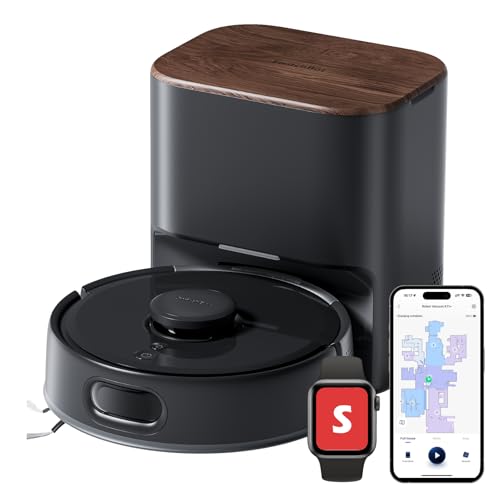
The US Federal Communications Commission (FCC) has introduced a significant new rule that could dramatically change the future of robot vacuums and other smart cleaning devices in the United States.
While nothing changes for consumers today, the decision could have long-term consequences for some of the biggest names in the smart home industry, including Roborock, Dreame, Ecovacs and Eufy. It may also have knock-on effects for Apple Home users who rely on these products as part of their smart home setup.
What Has Changed?
The FCC has updated its Covered List to include foreign-made advanced mobile robots, classifying them as equipment that could pose an unacceptable national security risk.
The decision stems from the Secure and Trusted Communications Networks Act of 2019, with regulators arguing that connected robots containing cameras, sensors, Wi-Fi and AI-powered navigation systems could present new cybersecurity risks.
The definition covers devices that:
- Move autonomously around a home or property
- Use sensors for navigation and obstacle avoidance
- Connect via Wi-Fi or Bluetooth
- Contain software, firmware or AI models controlling movement
- Weigh more than 4.4 pounds, including their docking station
While humanoid robots and quadruped robots were specifically mentioned, robot vacuums clearly fall within the definition. Robotic lawn mowers and pool cleaners are also expected to be affected.
Existing Robot Vacuums Are Not Affected
The most important point for existing owners is that nothing changes immediately.
Any robot vacuum that has already received FCC certification can continue to be sold, used and supported in the United States.
Manufacturers are also expected to continue providing software updates and customer support for existing products. Eufy has already confirmed that, based on its understanding of the new rules, its current products will remain available and continue to receive updates and customer support.
Instead, the regulation focuses on future products that require FCC approval before entering the US market.
Why Are Robot Vacuums Being Targeted?
According to US regulators, the concern centres around the growing number of sensors and connected technologies inside modern cleaning robots.
Today’s premium robot vacuums often include:
- High-resolution cameras
- LiDAR mapping systems
- AI-powered object recognition
- Microphones for voice control
- Wi-Fi connectivity
- Detailed maps of your home
The FCC argues these connected capabilities could provide potential avenues for cyber attacks or unauthorised access to data and the physical operation of these devices.
While any internet-connected device with cameras and microphones carries some level of security risk, it is notable that robot vacuums have become one of the first smart home product categories to face these restrictions. Smart speakers, video doorbells and many security cameras contain similar technologies, yet are not currently covered by the same measures.
What Does This Mean for Apple Home Users?
Apple Home itself is not affected by the ruling, but the decision could have indirect consequences
Many of the most popular robot vacuum manufacturers have embraced Matter support, allowing their products to integrate with Apple Home. Brands such as Roborock, Dreame, Ecovacs and Eufy have all expanded their Apple ecosystem support, making them popular choices for users looking to automate cleaning alongside their lights, locks and other Matter accessories.
Final Thoughts
Today’s announcement won’t affect your existing robot vacuum, and there’s no reason for current owners to worry about losing functionality or software support.
The bigger question is what happens over the next few years. If additional categories of connected home devices face similar restrictions—as we’ve already seen with certain networking equipment—the US smart home market could become increasingly fragmented.
The timing is also particularly significant with IFA Berlin just around the corner. The annual trade show normally see robot vacuum launches, with brands including Roborock, Dreame, Ecovacs typically unveiling their newer models. While we’ll almost certainly see plenty of new innovations announced in Germany this September, there’s now a real possibility that some of those products may never officially make it to the US market if they require new FCC approval.
For Apple Home users, the strength of the platform has always been the growing number of compatible devices. If fewer manufacturers are able to bring their latest products to the US, it could slow the adoption of new Matter-enabled robot vacuums and reduce consumer choice. Less competition also has the potential to push prices higher over time, making this a story worth watching well beyond the robot vacuum category itself.