
Apple confirmed in 2025 that support for its original HomeKit architecture will officially end on February 10, 2026, giving users a clear final deadline to move to the newer system. While this may feel sudden to some, it actually brings a long transition period to a close, one that began several years ago as Apple steadily evolved HomeKit toward a faster, more reliable, and more modern foundation built to scale with today’s smart homes.
I recently watched the WWDC 2014 as part of my research for my History of HomeKit video and it felt like opening a time capsule. At the time, it genuinely felt revolutionary. The idea that your lights, locks, thermostats, and sensors could be securely controlled from an iPhone was exciting in a way that is difficult to recreate today. HomeKit promised simplicity, privacy, and control at a moment when the smart home industry was already drifting toward cloud dependence and fragmented ecosystems.
That promise did not fully come together until a couple of years later.
The Home App Turns Ten
This year also marks ten years since Apple introduced the Home app with iOS 10 at WWDC 2016, and this was the moment everything truly clicked.
For the first time, Apple offered a single, unified destination for controlling smart home products. Before that, users relied heavily on third party apps, each with different feature sets, varying reliability, and inconsistent automation support. The Home app fundamentally changed the direction of smart home control by centralising everything in one place, launching simultaneously across iPhone, iPad, and Apple Watch.

Alongside the Home app, Apple also introduced automations and remote access using Apple TV as a home hub for the first time. This unlocked control of the home while away and laid the groundwork for more advanced automation, even if those early rules feel basic by today’s standards.
But as we move through 2026, it is clear that the version of HomeKit introduced during those early years belongs to a different era. What once defined Apple’s smart home platform has gradually been replaced, refined, and rebuilt. Legacy HomeKit, both as a platform and as a mindset, is quietly coming to an end, making space for a more capable and future ready version of Apple Home.
What Legacy HomeKit Gave Us
Early HomeKit was defined by strict certification requirements, limited device categories, and a relatively small group of manufacturers willing to play by Apple’s rules. Setup could be painful, accessories were often expensive, and compatibility lists were short enough to memorise. But beneath all of that friction, something genuinely important was forming.
Apple set expectations early and, crucially, stuck to them. Smart home devices should work locally whenever possible. Automations should not rely on distant servers or constant internet access. Home data should not be harvested, profiled, or sold to third parties. Even when HomeKit struggled to gain mass adoption and was criticised for moving slowly, those principles never really shifted.

Many of the original device makers that appeared in early HomeKit marketing or stood alongside Apple in those first announcements are no longer around. Others exist only in name, having been acquired or quietly absorbed into larger companies. Some simply walked away when they could not keep up with Apple’s requirements. That churn is a natural part of any early ecosystem finding its footing.
What matters is that the ideas those companies helped test and validate did not disappear with them.
Privacy and Local Control Became the Standard
Because Apple stayed firm on its principles around privacy and local control, the past few years have seen a noticeable shift across the wider smart home industry. More manufacturers are now moving features that were once processed in the cloud back onto the device itself, even when those features sit outside of Apple Home.
One company that followed this approach from the very beginning was Eve. Local processing was never treated as a feature or a selling point. It was simply how their products worked. Over time, the rest of the industry has been forced to move in the same direction.
Take eufy as an example of how expectations have changed. A few years ago, the company came under scrutiny after concerns emerged around how user data was being collected and handled. That moment damaged trust. Fast forward to 2025 and today, and eufy is back in Apple Home with devices that either work fully within Apple Home or ensure that any required data processing happens locally rather than being unnecessarily exposed.
Aqara shows a similar shift. In the early days, most Aqara devices required a dedicated bridge and an account just to get started. Now, the company is shipping more products with local control built in, many of which can be added directly to Apple Home without even needing an Aqara account.
User expectations have changed. Privacy, reliability, and local processing are no longer differentiators. They are baseline requirements. For manufacturers that want to earn and keep consumer trust, following this approach is no longer optional.
That is the real legacy of HomeKit.
Why Legacy HomeKit Is Being Left Behind
The smart home in 2026 looks nothing like it did in 2014. Homes are larger, denser, and filled with far more connected devices than anyone originally anticipated. Expectations are higher across the board. Reliability is no longer a nice to have. It is non negotiable. Users are also far less tolerant of juggling multiple apps, accounts, and cloud dependencies just to turn on a light or run a simple automation.
Legacy HomeKit was never designed for this level of scale or complexity. It was built around single purpose devices, relatively small networks, and simple rule based automations. That approach worked when smart homes consisted of a handful of lights and plugs, but it quickly showed its limits as homes became more interconnected.
Over time, Apple clearly recognised those constraints. The shift toward Thread, Matter, and a broader Apple Home identity is not a rebrand for marketing reasons. It represents a deeper technical and philosophical reset of how the platform is meant to operate.
The first hints that Apple was moving forward was in 2020 when it announced it had opened sourced HomeKit and joined an alliance with others, which became Matter. But Apples big move was when it first launched the updated Home architecture in November 2022 with iOS 16.2, promising major improvements in speed, reliability, and responsiveness. The rollout was not smooth. Some users experienced stability issues, prompting Apple to temporarily withdraw the upgrade in December 2022. After further refinements, the new architecture returned in February 2023 with iOS 16.4, laying the groundwork for the platform we now see in 2026. With the arrival of iOS 26, Apple effectively put the final nail in the coffin for legacy HomeKit, making the transition unavoidable.
The HomeKit label itself is slowly fading, but its DNA remains everywhere in Apple Home.
Apple Home Today and the Role of Matter
Apple Home today is far less about individual accessories and far more about infrastructure. Home hubs matter with local processing matters more than ever. Cameras analyse motion directly in your home. Automations continue to run even when the internet drops. The system as a whole feels more resilient and predictable.
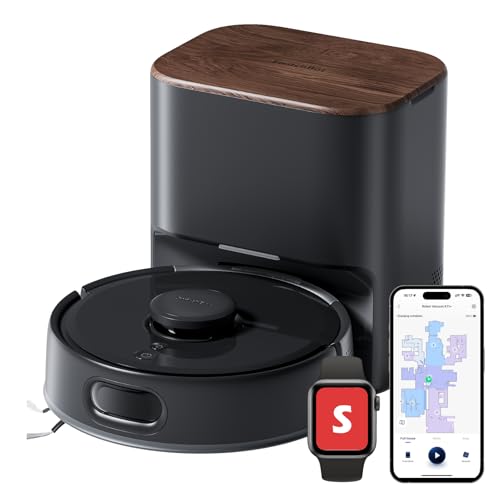
Driven by the Connectivity Standards Alliance, Matter has fundamentally reshaped the smart home conversation. It has lowered the barrier for device makers to support Apple Home, removing the need for Apple to persuade manufacturers to build specifically for its platform. As a result, Apple Home users have gained access to long requested device categories, including robot vacuums.
More importantly, Matter has changed what platform choice looks like. It allows users to move between ecosystems more easily, without feeling locked in or forced to start again from scratch. With that pressure removed, Apple can now focus on what it does best: making Apple Home the most polished, reliable, and privacy focused place to experience a smart home.
Looking Forward to What 2026 Could Bring
The next phase of Apple Home feels less about adding entirely new device categories and more about making the home feel genuinely aware. Rather than focusing on more switches, sensors, or accessories for the sake of it, the emphasis is shifting toward intelligence, context, and how everything works together as a system.
Spatial understanding, presence detection, and AI driven automations are starting to surface through device manufacturers in meaningful ways. This marks a move away from brittle, rule based logic toward homes that understand patterns, context, and intent. The home that knows when you are arriving rather than simply when a door opens. A home that understands when you are asleep rather than just when the lights are off. But also a home that can recognise when something feels out of place without needing to be explicitly told.
There is also a growing sense that Apple Home is preparing for new hardware roles within the home. Dedicated hubs with screens feel increasingly likely, offering more natural interaction points beyond phones and watches. Deeper camera integration could allow security, presence detection, and automation to blend together more seamlessly. At the same time, tighter links between security systems, lighting, and energy management point toward a future where the home actively responds to how it is being used, not just which buttons are pressed.
All of this builds on the same foundations that HomeKit introduced more than a decade ago. Local processing, privacy first design, and tight system integration remain central. The difference now is that the platform finally feels mature enough to turn those principles into an experience that feels intelligent rather than programmed.
A Quiet Goodbye
Legacy HomeKit is not being retired because it failed. It is being left behind because it did exactly what it needed to do.
Apple proved that a privacy first smart home was not only possible, but desirable. This forced an industry drifting toward cloud dependence to take local control seriously. Over time, we have seen device makers move a growing number of features, even those outside of Apple Home, away from cloud processing and onto the device itself. In doing so, HomeKit laid the groundwork for a platform that is finally ready to scale without compromising the values it was built on.
As we move through 2026, Apple Home needs to feel far less like an experiment and far more like an operating system for the home. It is stable, infrastructure led, and designed to fade into the background while everything simply works.
This is a goodbye to legacy HomeKit. Not with disappointment, frustration, or regret, but with appreciation. And it is also a look forward to an Apple Home that finally feels ready to become what the smart home was always meant to be.