Let’s talk about a most common argument in the smart home world: Apple Home versus Home Assistant. Which one is actually better?
Recently, I posted a short video on TikTok about this topic and it quickly passed 100,000 views. The comments were filled with strong opinions, especially from Home Assistant users. That reaction alone shows how passionate this space has become. It also highlighted something important: this debate deserves more than a quick, surface level take.
Before going any further, I highly rate Home Assistant. I genuinely respect what the platform has achieved, the depth of its community, and the flexibility it enables. This is not a hit piece, and it is not a fanboy rant. The goal here is balance and trying to direct users in the right direction.
The first thing we need to address is that the question itself is slightly wrong. Apple Home and Home Assistant are not trying to serve the same user in the same way. They overlap, but their design philosophy and target audience are very different.
What Is Apple Home?
Apple Home is Apple’s smart home platform, built on the original HomeKit framework introduced in 2014. Today, it is deeply integrated into Apple’s ecosystem and is available across devices people already own, including the iPhone, iPad, and Mac. Everything is controlled through the Home app, which comes preinstalled and ready to use.
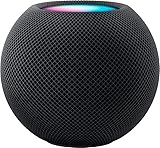
To unlock automations, remote access, and advanced features, you simply add a home hub. That can be an Apple TV 4K or a HomePod. Once a hub is in place, it manages automations, enables remote control when you are away from home, and supports features such as HomeKit Secure Video. With this setup, your smart home continues running locally even if your internet connection drops.
In terms of connectivity, Apple Home supports Wi Fi and Thread out of the box. For other technologies such as Zigbee, manufacturers often provide their own bridges, which integrate cleanly into Apple Home without requiring complex configuration. The key point is that most users do not need to think about the underlying network architecture. You plug in a hub, scan a code, assign a room, and it works.
That simplicity is intentional. Apple designs for predictability and ease of use. The platform focuses on reducing friction and making smart homes accessible to the mainstream Apple user.
What Is Home Assistant?
Home Assistant is an open source smart home platform built around local control, deep automation, and maximum flexibility. It can run on dedicated hardware, a mini PC, a server, or even a virtual machine. It supports a vast range of devices and integrations, often far more than Apple Home does at any given time.
However, that flexibility comes with responsibility. In many cases, you need to choose and set up your own hardware. You install the system, add integrations, configure automations, and maintain it over time. For some users, that is exactly the appeal. You decide how everything works. You are not constrained by a closed ecosystem.
If Apple Home is about reducing friction, Home Assistant is about removing limits. It allows for complex automations, custom logic, cross platform integrations, and deep system level control. It has also become significantly more user friendly over the years, with improved setup tools, powerful dashboards, and an excellent community that provides support and innovation.
But it still asks more of the user. When something breaks, you are often the one troubleshooting it. That is not necessarily a downside. It is simply the trade off for power and flexibility.
The Personal Computer Analogy
The best way to understand this comparison is through an analogy. Comparing Apple Home and Home Assistant is similar to comparing personal computers in their early days.
At first, computers were for builders. People assembled their own systems, chose individual components, and customised everything. If you were technical, you could achieve incredible power and flexibility. That world still exists today for enthusiasts.
But computers became mainstream when people could buy a ready-made system that worked out of the box. When brands began shipping complete, predictable, easy to use machines, adoption exploded. The average person does not want to build a computer. They want something that works.
Smart homes are in a similar phase right now. We are still early in the adoption curve. Most current users are enthusiasts and power users. But the next wave of growth will come from average households that simply want reliability and convenience.
Why Apple Home Works for the Average User
Apple Home makes sense for the average person because it lowers the barrier to entry. The Home app is already on their phone. They do not need to research servers, operating systems, or integrations. They buy a compatible device, scan a code, assign it to a room, and it works.
This has become even more true with the arrival of Matter. Matter has simplified purchasing decisions significantly. Instead of worrying whether a device supports Apple Home, Google Home, or Alexa, consumers can look for Matter support. If it supports Matter, it will largely work within Apple Home.
That reduces confusion. It increases choice. It encourages competition and often lowers prices. For the average buyer, this removes a huge amount of guesswork. They do not want to decode compatibility charts or read through forum threads. They want confidence that the product will work when they get home.
Apple Home’s strength lies in this controlled simplicity. However, that simplicity also means you must operate within Apple’s framework. You play by the platform’s rules. For many users, that is perfectly acceptable. For others, it feels restrictive.
Why Home Assistant Appeals to Power Users
Home Assistant appeals to people who enjoy understanding how things work under the hood. It is aimed squarely at tinkerers and enthusiasts who want to shape their smart home exactly how they envision it.
The ability to choose your own hardware is part of the appeal. You can run everything locally, avoid cloud dependencies, and integrate devices that would never naturally work together on closed platforms. The sheer number of supported devices is unmatched.
Home Assistant also enables advanced automations that go far beyond what most mainstream platforms allow. Custom logic, multi platform integrations, and highly specific behaviour rules are all possible. It is a toolbox rather than a predefined pathway.
However, that power comes with a steeper learning curve. Setup involves more decision making. Maintenance requires attention. Troubleshooting is often hands on. Some people love that level of control. Others bounce off it completely.
Neither approach is wrong. They simply suit different personalities.
The Reality Check
Smart homes have not yet reached mass adoption. We are still in the early stages. Right now, the market is dominated by enthusiasts. But as the category grows, simplicity will matter more and more.
Lower friction platforms tend to win when a technology goes mainstream. That does not mean power user platforms disappear. In fact, they often drive innovation that benefits everyone. Many device manufacturers now support both Apple Home and Home Assistant, recognising that both user groups matter.
Final Thoughts
So which one is better? Honestly, neither. And both.
Apple Home is better if you want simple, reliable, plug and play smart home control that is built into devices you already own. Matter has made that experience even smoother by reducing compatibility concerns and lowering the barrier to entry.
Home Assistant is better if you want maximum flexibility, deeper automation, and full control over how your smart home behaves. For many users, Matter is just one tool in a much larger toolbox within Home Assistant’s ecosystem.
That difference sums it up clearly.
- Apple Home removes friction.
- Home Assistant removes limits.
They are aimed at different users, at different stages, with different expectations. Many people start with Apple Home because it is familiar and accessible. Some eventually expand into Home Assistant as their needs grow. Others use both together.
That evolution is not a failure of either platform. It is simply how technology adoption works.
And that is the real answer to the debate.