Apple’s long-rumoured HomePad is shaping up to be one of the company’s most interesting new products for the home in years. While much of the discussion has naturally focused on its potential as a dedicated Apple Home controller, I think that misses the bigger picture.
The HomePad may ultimately be less about selling Apple Home to existing smart home enthusiasts and more about giving Apple a way to introduce the smart home to millions of people who currently have little interest in it.
That distinction matters because, despite years of growth and improvements from platforms such as Apple Home, Google Home and Amazon Alexa, the fully connected smart home is still far from mainstream.
Smart devices themselves are certainly popular. Millions of households have video doorbells, smart speakers, cameras, thermostats and the occasional smart light. But having one or two connected products is very different from building a home where lighting, heating, security, locks, sensors and other devices work together.
For many consumers, the smart home remains complicated and, perhaps more importantly, unnecessary. Most people simply aren’t looking for a dedicated control panel for their lights and locks.
This is where the HomePad could give Apple a very different route into the home.
The HomePad could be a family device first
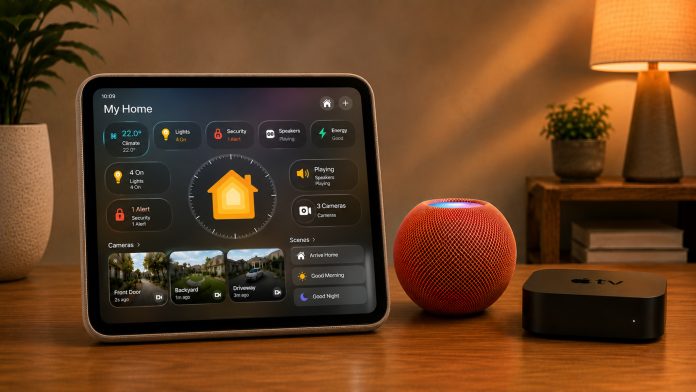
Reports suggest Apple’s HomePad will feature a roughly seven-inch square display and could be offered in configurations designed either to sit on a surface or mount to a wall. Recent software discoveries have also pointed towards an interface featuring “Faces”, a Face Gallery, widgets and Smart Stacks.
Those details suggest Apple is building something considerably broader than a permanent version of the Home app.
A HomePad placed in a kitchen, for example, could display the family’s calendar and upcoming appointments in the morning, provide weather information before everyone leaves the house and show reminders or shopping lists throughout the day.
It could become a screen for FaceTime calls, Apple Music controls, timers while cooking, family photos and information delivered through Siri and Apple Intelligence.
When someone rings the doorbell, the same screen could immediately display the camera feed. When nobody is interacting with it, the display could switch to photos, useful information or smart home controls.
Apple Home would therefore be an important part of the HomePad experience, but it wouldn’t necessarily be the reason somebody bought one.
And that could be the key to making the product successful.
Apple doesn’t need to sell people a smart home
The biggest challenge facing companies trying to expand the smart home isn’t necessarily technology anymore. Matter is improving interoperability, The bigger challenge is convincing ordinary consumers why they need any of it.
Someone who already has dozens of smart home devices will immediately understand the appeal of a dedicated Apple display. They can imagine their cameras, lights, locks, thermostats and scenes appearing on a screen mounted in the kitchen or hallway.
Instead of trying to convince those people that they need a smart home controller, Apple could do the opposite.
It could give them a device they want for entirely different reasons and make Apple Home one of its most useful features.
Someone might buy a HomePad because they want a shared family calendar in the kitchen. Once it’s there, they might connect their existing video doorbell and discover that visitors automatically appear on the display.
That could lead to adding some smart lighting. Then perhaps a smart lock, thermostat or a couple of sensors.
The smart home gradually becomes part of the HomePad experience without the customer ever making the conscious decision to “build a smart home”.
That is potentially a much easier proposition for Apple to sell.
The iPhone camera provides an interesting comparison
There is an interesting comparison to be made with the original iPhone.
When Steve Jobs introduced the iPhone in 2007, Apple famously presented it as three products in one: a widescreen iPod, a mobile phone and an internet communications device.
The iPhone also had a camera.
The camera wasn’t necessarily the reason people were buying an iPhone at the time, and it certainly wasn’t positioned as the product’s defining feature. Yet putting a camera into a device that people carried everywhere ultimately helped transform photography.
As smartphone cameras improved, people stopped needing to consciously decide to take a camera with them. They already had one in their pocket.
The result wasn’t simply that Apple sold more cameras. It helped change how people took, shared and consumed photographs and video.
The HomePad obviously isn’t going to have the same impact as the iPhone, but the underlying principle could be similar.
Apple doesn’t necessarily need to convince consumers that they want a smart home. It needs to put a gateway to the smart home into a device they already want.
A customer might buy a HomePad for FaceTime, calendars, photos, music, Siri or Apple Intelligence. Once the device is sitting on the kitchen counter every day, however, adding a smart light or connecting a doorbell becomes much more compelling.
The smart home becomes a feature rather than the product itself.
An Apple device that belongs to the home
This also highlights something that has been missing from Apple’s hardware ecosystem.
Most Apple devices are personal. An iPhone belongs to an individual. The same is generally true of an Apple Watch, Mac and iPad. Even the Apple TV is primarily designed around the television rather than the household itself.
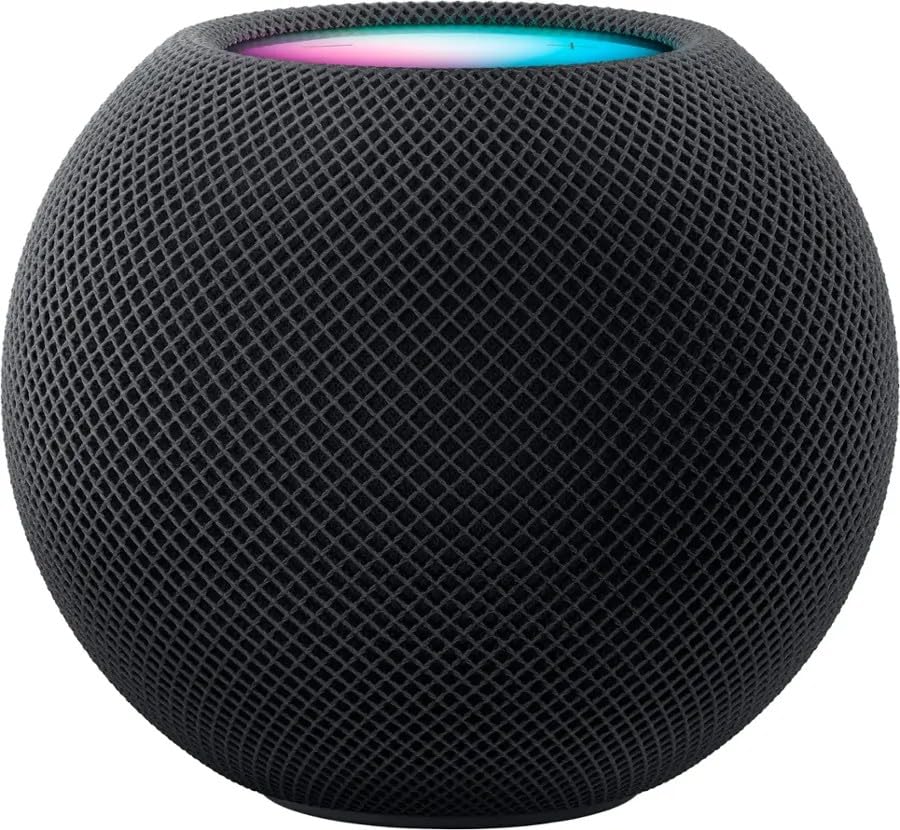
The HomePod comes closest to being a shared Apple device, but its lack of a display limits how much information it can provide.
The HomePad could fill that gap.
Rather than belonging to one person, it could effectively belong to the house.
Placed in a kitchen, hallway or living area, anyone in the household could interact with it. It could provide shared information while still potentially recognising individual users and displaying relevant information when required.
This becomes particularly interesting when combined with Apple’s wider ecosystem.
Calendars, Reminders, Photos, Apple Music, FaceTime, Siri, Apple Intelligence and Apple Home already exist. What Apple doesn’t currently have is a shared visual interface that brings all of those services together in the home.
The HomePad could provide exactly that.
Home unification rather than home automation
This is why I think it makes more sense to view the HomePad as a product focused on home unification, rather than simply home automation.
Apple Home would still be central to the experience. In fact, the HomePad could easily become the best interface Apple has ever created for its smart home platform.
Security cameras could automatically appear when activity is detected. Doorbell notifications could immediately show who is outside. Users could check whether doors are locked, adjust heating, control lighting or activate scenes without reaching for an iPhone.
A more conversational Siri could make those interactions even easier.
But alongside those smart home functions would be all the other things happening inside a household.
Who’s got an appointment today? What’s the weather going to be like? What’s on the shopping list? How long is left on the timer? Who’s calling on FaceTime? What’s playing on Apple Music?
Instead of creating another device that performs one specific role, Apple has the opportunity to create a central interface for the household.
And that potentially gives the HomePad a much larger audience.
Apple’s route to making the smart home mainstream
Apple has a major advantage if it decides to take this approach. It doesn’t need customers to understand Matter, Thread, hubs or smart home ecosystems before they start.
Millions of people already use Apple’s services and devices every day. The HomePad could simply extend those experiences into another part of their lives.
A customer adds a Matter light and it appears on their HomePad. They buy a compatible doorbell and suddenly visitors appear on the kitchen display. They install a smart lock and the HomePad can show whether the front door is secure.
Each additional device makes the HomePad more useful, while the HomePad itself makes adding more smart home devices increasingly attractive.
That creates an ecosystem effect that Apple has used extremely successfully elsewhere.
It could also help solve one of the smart home’s biggest problems: people don’t necessarily understand what a connected home can do until they actually start using one.
The HomePad gives Apple somewhere to demonstrate that value every day.